From press releases to “Press Experiences”: why media centers are becoming much more dynamic.
In the past few years, we have seen a shift in the perception of press centers. They are sometimes treated as an afterthought, a place to upload a few PDFs, maybe a logo pack, and call it a day.
For clear reasons, this sort of approach has become lacking in many aspects, from presentation to branding, to access to assets. Today, your media center isn’t just for journalists, it’s becoming one of the most important brand touchpoints to have.
The shift: from static information to dynamic experience
The way people discover and evaluate brands has changed. Journalists, bloggers, influencers, partners, distributors, investors, even fans, are looking for more in depth information on new releases. And when they land in a media center, they expect more than files. They expect an experience.
Most traditional press centers were built for a different era. They are:
Static
Hard to navigate
Focused on documents instead of storytelling
Designed for internal convenience rather than external impact
This more than likely results in the fact that no matter how strong your content is, it loses it’s value because it’s presented in a way that feels outdated, fragmented, or difficult to explore. In an industry where attention is fiercely contested, that’s a risk you can’t afford to take.

The rise of the “press experience”
My guilty pleasure is watching from afar what’s happening in physical PR. Premieres, parties, launch events, they’re no longer just about showing content. They’re about creating an entire experience. From immersive set designs to curated moments (think productions like WBD’s Wuthering Heights turning premieres into atmospheric, story-driven events), PR teams are investing heavily more than ever in HOW stories are presented, not just what is presented.
But here’s the gap: While physical PR has evolved, digital PR is still often quite traditional. Many press rooms are still treated like storage folders with files and scattered assets.
So the real question is: why doesn’t your digital presence live up to the same standard as your physical one?
What if your media center wasn’t just a place to host content, but a curated environment that:
Tells a clear story
Showcases content visually
Guides visitors through releases, assets, and updates
Reflects your brand’s identity and tone
Screenshot from @Secret.london instagram
This is where the shift is happening. Content leaders aren’t just publishing updates anymore, they’re designing press experiences. And to be honest, digital content is much, much less expensive than impressive physical events. Not a dropbox. Not an archive. Something closer to a content destination where every asset has context, and every visit feels intentional.
Why expectations are rising
This shift isn’t happening in isolation. It’s driven by a broader change in user expectations. People are used to:
Browsing content seamlessly on streaming platforms
Discovering stories through visuals and video
Navigating intuitive, well-structured interfaces
When they land on your media center, they fortunately bring those expectations with them. If your press room feels clunky or outdated it affects both usability and how your brand is perceived.
“Here’s the reality: Your media center is often the most important interaction that media has with your brand. Not your carefully designed homepage. Not your marketing campaign.”
That means it needs to communicate your brand clearly and instantly, present your content in a compelling way, make it easy to find, use, and share assets and of course, work for multiple audiences at once. Because today, you’re not just speaking to journalists, you’re speaking to an entire ecosystem of parties.
From one audience to many
Modern media communication is no longer one-dimensional. Your content needs to work for journalists looking for quick access to verified information, distributors evaluating potential deals, partners exploring collaboration opportunities and very, very importantly, influencers searching for ready-to-use assets
Each of these audiences has different needs, but the reality is that they all expect a smooth, professional experience. This is where unfortunately most traditional setups fall short.
What a modern media center needs to deliver
To meet today’s expectations, your press center should function more like a platform than a folder. That means:
Structured content that’s easy to navigate
Rich media (video, images, trailers, artwork) presented visually
Clear storytelling around releases and announcements
Fast access to downloadable, ready-to-use assets
Consistent branding across every touchpoint
When done right, it doesn’t just support your PR efforts, rather completely amplifies them. And in this busy space it’s best to stand out.
Curated Press Centers: the way to go.
This is exactly the shift Clipsource is built for. The Media Center isn’t just a place to upload content but rather designed to help companies create structured, branded press experiences that:
Combine storytelling and asset management
Serve multiple audiences from one platform
Scale across releases, campaigns, and markets
Maintain a consistent, premium presentation
Instead of sending people to scattered folders or static pages, you can bring everything together in one cohesive environment.
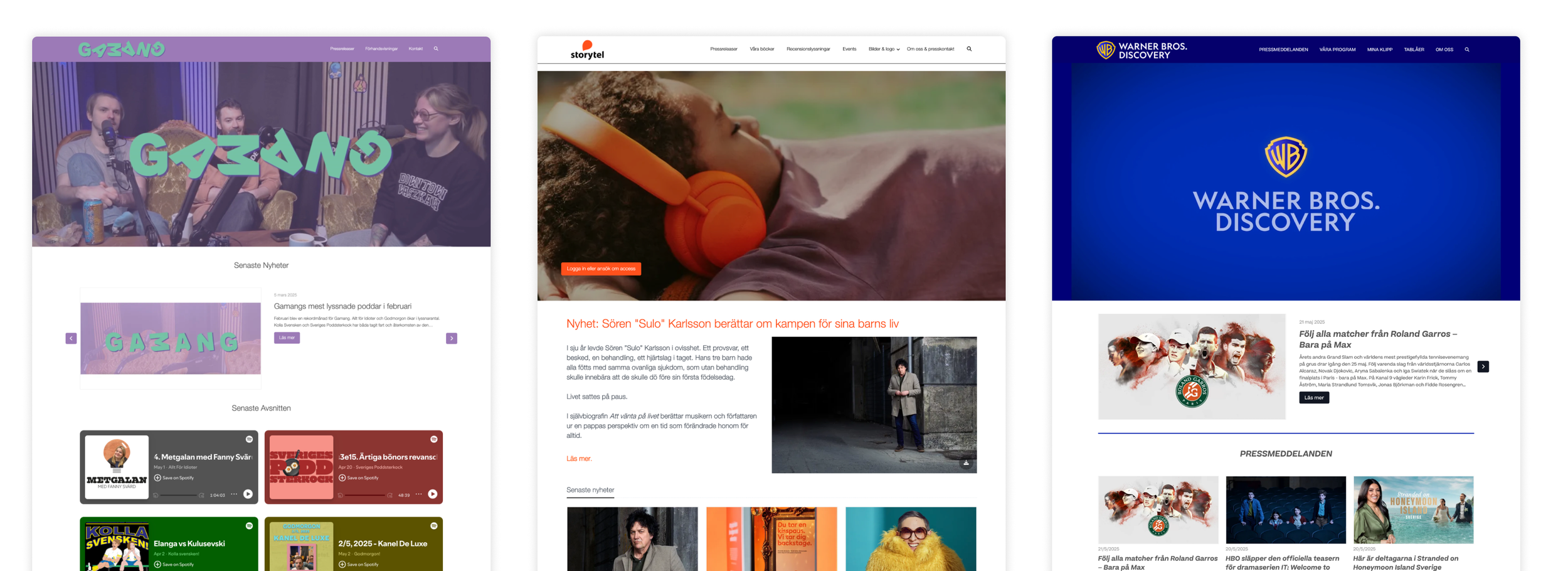
The role of digital PR has fundamentally changed. It’s no longer just a supporting tool, it’s a central part of how your brand is discovered, experienced, and remembered. The teams that stand out today are sharing content and shaping how that content is experienced throughout the industry. And as expectations continue to rise, the question isn’t if you should evolve your media page, but how fast you can turn it into something worth exploring.
Ready to elevate your digital PR game? Contact us at sales@clipsource.com